Tutorial 8 of 10
Variety types — cherry or beefsteak, early or maincrop
Beginner 5 min
Choose a variety type for a planting so its days to harvest, spacing and dates follow it, and match the names on your seed packets to a type.
A tomato is not just a tomato: a cherry tomato ripens weeks before a beefsteak, a first early potato is lifted before blight arrives while a maincrop stays in the ground into autumn. Greenplot knows variety types for 47 common crops — tomatoes, peppers, potatoes, carrots, beans, peas, squash, lettuce, cabbages, apples, plums, oyster mushrooms and more.
What a variety type changes
Each type has its own days to harvest and, where it differs, its own spacing, height and sowing windows. A giant kohlrabi takes a whole 30 cm square instead of four; a winter radish is sown in midsummer, not in spring; a blue oyster mushroom fruits at cooler temperatures than a pink one.
Everything else stays with the plant: the family, the rotation group, frost hardiness and the companions. A beefsteak tomato is still a tomato next to your potatoes.
Look the types up
Open a plant in the Plants view. Under Variety types you see each type with what is different about it, a few well-known named varieties as examples, and its days to harvest.
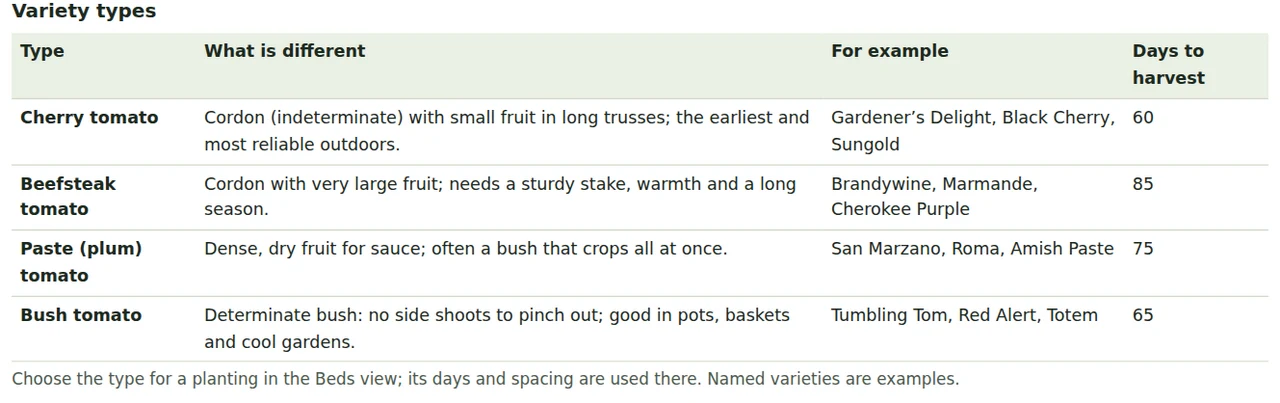
Named varieties are listed only so you can match your seed packet to a type — “San Marzano” is a paste tomato, “Arran Pilot” a first early potato.
Plant a variety type
In the Beds view, pick the plant under Plant to place. If it has types, a Variety type field appears next to it: choose one before you click squares, and the new planting gets that type's dates and spacing.
For plantings that already exist, the planting table below the bed has a variety type choice in the variety column. Changing it moves the harvest dates in the calendar and the tasks at once. The text field next to it is for your own name of the variety (for example the cultivar on the packet).
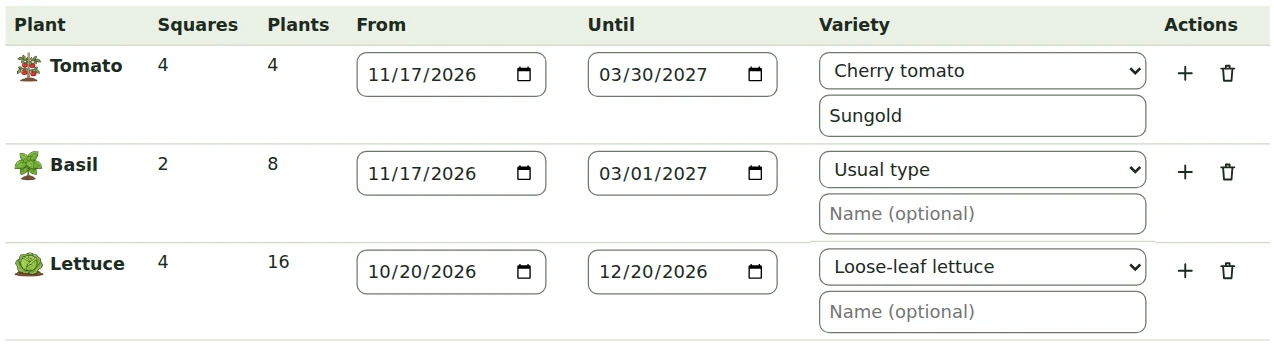
Repeat sowings use the type too: a loose-leaf lettuce is ready in 45 days, so its succession plan is tighter than for a crisphead.
Older garden files
Gardens saved before variety types existed open as usual. If the variety text of a planting names a type or one of its example varieties (“San Marzano”, “cherry tomato”), Greenplot sets the type for you; any other text stays as your own note.
Ready to try it?